

Vernon Candidates Clash Over Water Fire Protection and Growth Plans ; Predator Ridge Forum

Vernon’s election conversation is no longer centred on whether the city is growing. It is centred on whether the city’s roads, water systems, fire services, housing supply, and budget decisions are keeping up.

At a candidate panel at Predator Ridge, Vernon City Council and mayoral hopefuls put those pressures in plain view. Water security, wildfire protection, housing affordability, economic growth, and responsible fiscal management drove much of the discussion. While the candidates often agreed on the big picture, they split on priorities, timing, funding, and leadership style.
The strongest point of consensus was clear: infrastructure cannot be treated as an afterthought. Candidates repeatedly returned to the need for fire protection, water planning, and growth management that matches what Vernon is becoming, not what it used to be.
Growth framed almost every issue
Growth emerged as the thread connecting nearly every issue discussed at the panel. More homes mean greater demand on water systems, while neighbourhoods near forested areas require stronger fire protection. Increasing traffic raises concerns about road safety and traffic calming, and a growing population creates additional demand for recreation, health supports, and public spaces.

The candidates offered different perspectives on how Vernon should respond. Some emphasized proactive planning, public input, and responsible maintenance to avoid costly surprises. Others focused on practical service delivery, growth management, fire protection, and cooperation across the community. Wayne Carson, drawing on his experience as a former fire chief, brought an operational perspective, including a proposal for a city-managed rooftop sprinkler system in higher-risk areas.
The discussion revealed a familiar divide in local politics: some candidates prioritized immediate infrastructure and service needs, while others stressed long-term planning, responsible spending, and evidence-based development. Despite those differences, the conversation made one point clear—Vernon’s future growth will require careful decisions about water, safety, housing, transportation, and the services residents depend on.
Water security became a test of planning
Water drew some of the clearest urgency of the evening.
Vernon sits in a region where water supply, summer heat, development, agriculture, fire response, and recreation are all connected. The candidates treated water not as a single utility issue, but as a growth issue, a safety issue, and an economic issue.
Emphasis on water infrastructure reflected a broader concern that planning must happen before the stress becomes visible to residents. In that view, waiting until capacity is strained would leave the city with fewer choices and higher costs.

Water was also connected to long-range planning. Support for using the OCP as a guide pointed to a more structured approach: decide where growth should happen, understand the service demands, then align infrastructure spending with that plan.
The candidate’s position fit within the same frame of responsible growth. Experience was presented as an asset, especially in balancing near-term pressures with the realities of city budgeting.
The larger point was hard to miss. Candidates may differ on process, but most seemed to accept that water security needs clearer prioritization.
Water planning is not just about pipes and reservoirs. In Vernon, it is now a question about the pace, location, and cost of growth.
That matters because infrastructure projects rarely move quickly. Design, approvals, financing, and construction can take years. If a city waits until systems are under visible strain, residents often face either service limits, higher tax pressure, or rushed capital spending.
The panel did not produce one shared funding plan for water upgrades. It did show that water will likely remain one of the defining issues of the campaign.
Wildfire protection split into prevention and operations

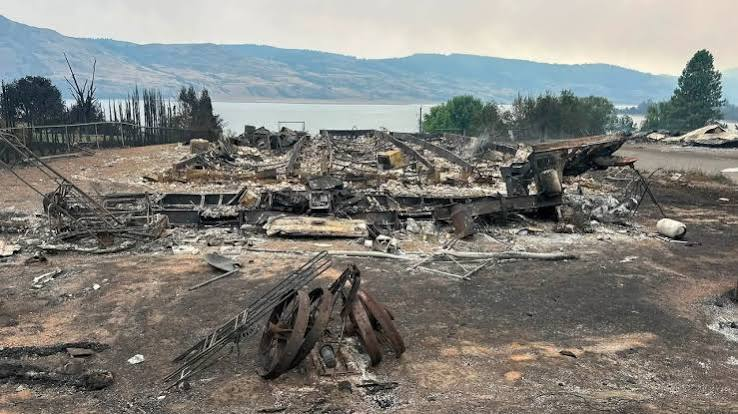
Wildfire risk brought some of the most concrete ideas to the panel.
Carson’s proposal for a city-managed rooftop sprinkler system stood out because it moved beyond general support for fire safety. The concept focused on defending homes in higher-risk locations before fire reaches them, especially where neighbourhoods meet wildland areas.
As a former fire chief, Carson framed the issue through operations. That meant looking at what crews can do, what systems can be put in place, and how the city can reduce risk before an emergency.
A candidate also emphasized fire protection, placing it among core priorities. The approach appeared broader, tied to community collaboration and responsible growth. Fire protection, in that model, is not only about equipment or staffing. It is also about how neighbourhoods are planned, how traffic moves, and how residents work with the city on preparedness.
The debate around wildfire protection revealed a wider tension in local government: should the city focus first on core safety services, or should it keep investing across a wider range of community amenities at the same time?
That question surfaced repeatedly, especially when cultural and recreational infrastructure entered the conversation.
Critics of broad spending often argue that fire protection, water, roads, and basic services must come first. Supporters of wider public investment respond that recreation centres, cultural spaces, and community facilities also shape quality of life, attract workers, and support economic growth.
The panel did not settle that dispute. It made clear that fire protection is likely to be one of the files voters use to judge whether candidates understand the risks of growth in the North Okanagan.
Housing affordability stayed tied to infrastructure and growth
Housing affordability came up as both a social issue and an economic one.
Candidates recognized that Vernon needs housing options for different stages of life and income levels. That includes workers, families, seniors, and people at risk of losing stable housing. The challenge is that new housing also requires services. Roads, sewer, water, fire response, parks, and transit all need to keep pace.
This is where the growth debate became more complicated.
If the city slows development too much, housing supply can tighten and prices can climb. If it approves growth without enough infrastructure planning, the city can inherit expensive service gaps. If new projects are too costly or slow to approve, builders may struggle to deliver housing residents can afford.
The candidates approached the issue from different angles.
Main emphasis at the panel
More proactive planning and stronger public input, especially on infrastructure
another candidate
Responsible growth, fire protection, traffic calming, and collaboration
Wayne Carson
Practical wildfire protection and operational readiness
Long-term planning through the OCP, with water security tied to prosperity
a resident, represented by another resident
Wise growth, evidence-based decisions, and responsible spending
The table shows why housing did not stand alone. Every housing answer led back to growth management.
For Vernon, the affordability question is not only how many units get built. It is where they go, how they are serviced, whether they are near jobs and transportation, and whether tax dollars can support the infrastructure they require.

Spending choices exposed the sharpest differences
The clearest clash came around fiscal priorities.
Large-scale projects, including the Active Living Centre, were discussed as examples of the difficult choices facing council. Candidates differed over how such projects should be paid for, how clearly costs should be explained, and whether major community facilities should move ahead while safety and utility infrastructure also need attention.
The split was not simply pro-spending versus anti-spending.
Some candidates argued for restraint, sequencing, and clearer public input. Others pointed to the value of long-term investment in facilities that support health, recreation, and economic appeal. A growing city needs more than emergency response. It also needs places where people gather, exercise, learn, and build community.
Still, residents often judge spending through immediate pressures. If traffic is getting worse, water rates are rising, or fire risk feels more real each summer, cultural and recreation projects can face tougher scrutiny.
That is why the funding details matter. Voters are likely to ask:
What will be paid through taxes?
What will rely on borrowing?
What can be covered through reserves, grants, or development charges?
What operating costs follow after construction?
Which projects can wait, and which cannot?
The panel highlighted a key challenge for whoever wins a seat: saying yes to one project can limit room for another. Fiscal management is not only about keeping taxes low. It is about being clear on trade-offs before the bill arrives.
Homelessness revealed different views of the city’s role
The discussion also turned to homelessness and related social issues.
Here, candidates appeared to differ less on whether the issue matters and more on what role the city should play. Municipal governments do not control every lever. Housing support, health care, mental health services, and income assistance involve provincial and federal responsibilities. Even so, cities deal with the visible effects every day.
That creates pressure on councils to act, even when their tools are limited.
Some approaches focus on enforcement, bylaw response, and public safety. Others focus on partnerships with service providers, housing agencies, health authorities, and senior governments. A third approach puts more weight on data, measuring what is happening and directing resources where they have the strongest effect.
The Predator Ridge forum suggested that Vernon’s next council will need to combine those approaches. Residents want parks, streets, and public areas to feel safe. At the same time, long-term progress on homelessness rarely comes from enforcement alone.
The issue also loops back to housing affordability. When rents rise and vacancy remains tight, more people live closer to the edge. That can put pressure on shelters, outreach workers, emergency services, and neighbourhoods.
Leadership style became part of the choice
Beyond policy, the panel revealed different ideas about leadership.

One platform leaned into the role of watchdog and public advocate. His pitch suggested a council that asks harder questions earlier and brings residents deeper into decisions before plans are locked in.
the candidate drew on continuity and experience. Her message suggested that council work depends on relationships, practical knowledge, and the ability to move files forward without losing sight of daily resident concerns.
Carson offered a more operational style. His background in fire services shaped a direct, problem-solving approach, especially on wildfire readiness.
Another candidate emphasized long-range planning and the OCP. His leadership model appeared rooted in consistency, evidence, and the belief that the city should follow a clear planning framework through changing political cycles.
These differences matter because a municipal council does not operate like a single executive office. Councillors must persuade, negotiate, read staff reports, hear residents, and make decisions in public. A mayor must chair meetings, represent the city, and help set direction, but still needs council support.
Policy positions matter. So does temperament.
The central question is what Vernon should fund first
The Predator Ridge panel showed a race shaped by practical concerns rather than slogans.
Vernon’s candidates largely agreed that water systems, fire protection, housing, and infrastructure need attention. The disagreement came in the order of priorities, the level of urgency, and the way major projects should be funded.
That leaves voters with a set of clear questions to weigh before choosing a candidate:
Who has the most credible plan for water security?
Who can explain how wildfire protection will improve on the ground?
Who understands the link between housing, infrastructure, and affordability?
Who is clearest about the cost of major projects?
Who will communicate with residents before decisions become difficult to change?
The panel did not produce a single winning answer. It did something more useful. It showed the trade-offs clearly.
Vernon is growing, and growth brings choices. The next council will have to decide which risks need immediate action, which investments can shape the city for decades, and how much residents are willing to pay for both.


Comments