

FireSmart Sprinkler Bylaw Could Protect Vernon Homes from Wildfire

Updated: Sep 11
Wildfire is no longer a distant risk for Vernon and the North Okanagan. It is a recurring threat to homes, evacuations, local roads, insurance, emergency services, and the region’s already tight housing supply.
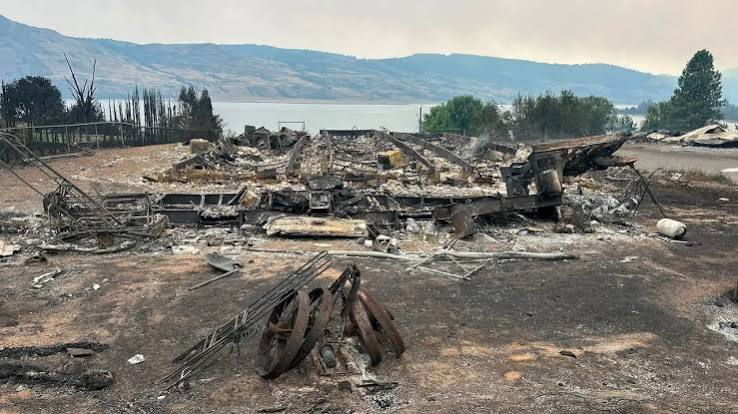
In 2021, the White Rock Lake fire pushed across the north end of Okanagan Lake and placed Vernon on evacuation alert. More than 75 homes were destroyed on the west side of the lake. The 2023 Okanagan fire season brought more destruction across the region, with hundreds of structures damaged or lost. In August 2026, the Bradley Creek wildfire destroyed an estimated 230 homes west of Vernon, and the Regional District of North Okanagan directed evacuees to Kal Tire Place.
Those events point to a hard lesson: Vernon and the surrounding electoral areas need more than response capacity. They need permanent, property-level protection built into the way homes are planned, renovated, and retrofitted in wildfire interface areas.
This article outlines a candidate’s proposal from Wayne Carson, candidate for Vernon City Council, to be submitted to Scott Anderson, MP for Vernon, Lake Country, Monashee. It is not an official position of the City of Vernon or the RDNO. If elected, Carson says he would bring it forward for Council consideration and partnership development with the Regional District of North Okanagan.
The proposal is simple in concept: create a FireSmart Structural Protection Sprinkler Bylaw and Operational Program for Vernon and RDNO electoral areas.

Why roof-edge sprinklers belong in the wildfire conversation
Most homes lost in wildfires do not ignite because a wall of flame reaches the front door. Many ignite when embers land on vulnerable surfaces, collect in gutters, enter vents, burn against siding, or light nearby vegetation and debris.
That makes the roof edge, gutters, decks, vents, fences, sheds, and landscaping critical parts of home defence.
FireSmart principles already focus on these risks. They encourage residents to clear combustible material near homes, use fire-resistant building materials, screen vents, keep gutters clean, space vegetation properly, and reduce fuels in the immediate zone around the structure.
A permanent sprinkler system would not replace those steps. It would add another layer.
The proposed bylaw would require permanently mounted roof-top sprinkler systems on:
New homes in designated wildland-urban interface zones
Major renovations in those same zones
Other high-risk structures identified through local mapping and FireSmart criteria
For existing homes, the program would offer subsidized retrofits, but only where the property meets FireSmart standards. That condition matters. A sprinkler system on a property surrounded by dry cedar hedges, debris-filled gutters, and combustible clutter would give a false sense of security.
The goal is not to make any home fireproof. No bylaw can promise that. The goal is to reduce ignition risk during the most dangerous hours of a wildfire, especially when embers and radiant heat threaten neighbourhoods before and during evacuation.
What the proposed bylaw would actually do
A strong bylaw would need to be clear, practical, fair, and enforceable. It should avoid vague requirements that leave builders, homeowners, inspectors, and firefighters guessing.
At its core, the proposed program would have two connected parts.
Program element | What it would require | Why it matters |
New construction rule | Permanently mounted roof-top sprinkler systems in mapped wildfire interface zones | Builds protection into homes from the start |
Major renovation rule | Sprinkler installation when a qualifying renovation triggers the bylaw | Adds protection when major work is already underway |
Retrofit subsidy | Financial help for existing homes that meet FireSmart standards | Encourages voluntary upgrades without punishing owners |
Operational protocol | Clear rules for activation, water use, maintenance, and emergency coordination | Prevents confusion during an evacuation and allows for a water management plan |
Regional partnership | City, RDNO, federal funding, and emergency services working from one model | Makes protection consistent across boundaries |
The bylaw would likely apply only in designated risk areas, not across every property in Vernon. That distinction is important. A flat city-wide rule could waste money and reduce public support. A mapped approach would focus on neighbourhoods closest to forest, grassland, steep terrain, and known wildfire corridors.
The program would also need clear technical standards. These could cover:
Placement of roof-top sprinkler heads
Minimum spray coverage for roof, gutters, decks, and immediate structure zones
Backflow prevention
Freeze protection
Pump and pressure requirements where needed
Compatibility with municipal or on-property water systems
Maintenance checks before each fire season
Safe activation procedures during evacuation alerts and orders
Good policy would keep the system simple enough for homeowners to maintain, but reliable enough for emergency use.

The case for federal seed funding
Municipalities and regional districts already carry heavy wildfire costs. They handle planning, response, evacuation reception, infrastructure repair, public communication, and recovery. Asking local taxpayers to carry the full cost of a new mitigation program would slow progress.
That is why this proposal seeks federal partnership and seed funding.
Federal support could help with the parts that are hardest for local governments to launch on their own:
Mapping high-risk zones
Developing technical standards
Offering first-round retrofit grants
Training installers and inspectors
Building public education materials
Supporting RDNO and City coordination
Evaluating results after the first fire seasons
Seed funding would not need to pay for every sprinkler on every home forever. It could help start the program, prove the model, and reduce early costs for homeowners most exposed to wildfire.
This approach also fits a larger national concern. Canada is seeing longer, more severe wildfire seasons in many regions. Communities need practical tools that protect housing before disaster strikes. A Vernon and RDNO pilot could become a model for other interface communities in British Columbia and beyond.
Why housing protection is emergency management
When a wildfire destroys homes, the impacts last far longer than the flames.
Families lose shelter, documents, belongings, pets, vehicles, and neighbourhood connections. Renters face a tighter market. Owners face insurance claims and rebuilding delays. Seniors, people with disabilities, and lower-income households often have fewer options after evacuation.
The local economy also takes a hit. Workers may leave. Construction capacity gets stretched. Public agencies spend years managing recovery.
That makes structural protection a housing policy issue, not just a fire issue.
Vernon already faces pressure on housing supply. Losing homes to wildfire makes that pressure worse. A roof-top sprinkler bylaw would not solve affordability, but it could help protect existing and future housing from avoidable loss.
The timing matters too. Retrofitting after a major fire is more expensive and emotionally draining. Rebuilding after destruction is slower than preventing ignition in the first place. A permanent system installed during construction or renovation is easier to plan, inspect, and maintain.

The program must answer real concerns
A bylaw like this would raise fair questions. Council, RDNO directors, fire officials, builders, insurers, and residents would need straight answers before adoption.
Will sprinklers waste water?
Water supply is a serious concern in the Okanagan. Any program must respect drought conditions, municipal capacity, and rural well limits.
That means sprinkler systems should not be treated like lawn irrigation. They should be designed for emergency use, tested responsibly, and activated under clear conditions. The operational program would need rules for when and how fire officials or homeowners may run them, how long they should run, and how they fit with emergency orders.
In some rural areas, water tanks, pumps, or independent sources may be needed. In others, a sprinkler requirement may not be practical without upgrades. A good bylaw would not ignore those limits.
Will this increase building costs?
Yes, a permanent system would add cost to new builds and major renovations. The better question is whether that cost is reasonable compared with the cost of losing homes, rebuilding infrastructure, and supporting evacuees.
For new construction in high-risk areas, the cost can be planned into the project from the start. For existing homes, subsidies would help avoid placing the full burden on residents. The proposal also links retrofit support to FireSmart compliance, so public dollars support properties that have taken basic risk-reduction steps.
Could homeowners ignore maintenance?
They could, unless the program includes inspection and maintenance requirements.
A sprinkler that fails during an emergency is worse than no sprinkler, because people may count on it. The bylaw should require periodic checks, simple homeowner guidance, and confirmation during property sale or major permitting events.
Maintenance should be easy to understand. Residents need plain instructions, not a technical manual nobody reads.
Could sprinklers interfere with firefighters?
That is why the proposal includes an operational program, not just a construction rule.
Fire departments and emergency managers would need input on activation, access, signage, water flow, and shutoff procedures. The system should support structural protection crews, not complicate their work.
If firefighters know which neighbourhoods have permanent systems, they can include that information in pre-incident planning. That could help crews defend more homes with fewer temporary sprinkler deployments.
A regional approach is essential
Wildfire does not stop at the city boundary. Vernon, nearby rural neighbourhoods, Okanagan Lake communities, and RDNO electoral areas share the same smoke, roads, evacuation routes, reception centres, and recovery challenges.
That is why a Vernon-only program would be useful, but incomplete.
A joint City and RDNO approach would create more consistent expectations across interface areas. It would also help with public education. Homeowners should not face one set of rules on one side of a boundary and a completely different standard nearby, unless the risk mapping clearly supports that difference.
Regional cooperation could also help with procurement. If many homeowners need similar approved systems, the region may be able to attract qualified installers, standardize parts, and reduce confusion.
A shared model could include:
Joint wildfire interface mapping
Common technical requirements
Aligned building permit triggers
Shared public information
Coordinated grant applications
Compatible inspection practices
Mutual support during evacuation alerts
This is especially important for rural properties that may rely on different water sources and have longer emergency response times.

What a careful rollout could look like
The strongest version of this proposal would start with a pilot. That would let the City, RDNO, local fire services, builders, and residents test the details before scaling up.
A practical rollout could follow five phases.
Map the highest-risk areas
Use local wildfire risk data, FireSmart principles, slope, fuels, access, and water availability to define where the bylaw should apply.
Set technical standards
Work with fire professionals, building officials, plumbers, roofers, and insurers to define approved systems and installation requirements.
Launch voluntary retrofits first
Offer subsidies to existing homeowners who complete FireSmart work and install approved systems. This creates early examples and public confidence.
Apply rules to new builds and major renovations
Once standards are clear, add the requirement to permits in designated zones.
Review after each fire season
Track participation, maintenance issues, homeowner feedback, water concerns, and any wildfire performance data. Adjust the program as lessons emerge.
This kind of phased approach would reduce backlash. It would also give Council and RDNO directors better evidence before expanding the program.
A first-line defence, not a silver bullet
The proposal should be judged on what it can realistically do.
A FireSmart sprinkler bylaw will not stop lightning. It will not replace forest fuel management, evacuation planning, emergency alerts, trained firefighters, or Indigenous and regional land stewardship. It will not save every structure in every fire.
But it could help homes survive ember showers and heat exposure in the critical window when many structures ignite. It could reduce the number of homes needing last-minute temporary sprinkler protection. It could make new construction in high-risk zones more responsible. It could help protect housing supply in a region that cannot afford repeated losses.
That is a serious public benefit.
The North Okanagan has already seen what wildfire can do. Waiting for the next evacuation alert or order is not a plan. Building permanent, FireSmart-aligned protection into homes gives residents, firefighters, and local governments one more tool before the smoke arrives.
A bylaw will need debate, costing, technical review, and public input. It should be shaped carefully, with attention to water, affordability, and rural realities. Still, the direction is right: protect homes before they burn, not only after the danger is at the doorstep.
Comments